
What we know
about Rwanda.
Rwanda is the smallest country in this collection and the one that requires the least justification. You come for the mountain gorillas — the last remaining population of a great ape species that came within decades of extinction — and the experience of sitting within metres of a silverback in the cloud forest of the Virunga Volcanoes is one that resists comparison with anything else in African travel. There are roughly one thousand mountain gorillas alive. All of them live in a single trans-boundary ecosystem straddling Rwanda, Uganda, and the Democratic Republic of Congo. Rwanda’s Volcanoes National Park holds eleven habituated gorilla families, each visited by a maximum of eight people per day. The mathematics of access are deliberately restrictive, and that restriction is the point.
What Rwanda has built around that central experience is worth examining carefully. The country has undergone a transformation in the thirty years since the genocide of 1994 that is, by any honest measure, extraordinary — Kigali is now one of the cleanest, safest, and most efficiently governed cities in sub-Saharan Africa, a fact that rewards the visitor who spends a night or two exploring it rather than treating it purely as a transit point. The gorilla permit revenue funds both the park’s conservation infrastructure and community programmes in the buffer zones around the Virungas, producing a model of wildlife-funded development that has been studied and partially replicated across the continent.
The country’s other parks are less celebrated than the Virungas but genuinely rewarding in their own right. Nyungwe Forest National Park in the southwest holds the largest montane rainforest in Central Africa, with chimpanzee and thirteen other primate species, and a canopy walkway that suspends you thirty-five metres above the forest floor in a way that recalibrates your understanding of what a forest actually is. Akagera National Park in the east has been reborn — black and white rhino reintroduced, lion and wild dog returned after a multi-decade absence — as one of East Africa’s most successful rewilding stories, covering nearly two thousand square kilometres of savannah, wetland, and lake along the Tanzanian border.
Rwanda asks for less time than Kenya or Tanzania and gives back with a concentration and specificity that larger destinations cannot match. Three days in the Virungas, two days in Nyungwe, two in Akagera, and a final night in Kigali produce a journey of genuine depth. It also combines naturally with Uganda — the Bwindi Impenetrable Forest gorilla experience across the border — for those who want to understand the full gorilla conservation story across two countries.
Where to go
in Rwanda.

Volcanoes National Park & the Virungas
Bisoke, Karisimbi, Muhabura, Sabyinyo, Gahinga
The Virunga Volcanoes form a chain of eight peaks along the borders of Rwanda, Uganda, and the DRC, their upper slopes permanently shrouded in cloud forest and Hagenia woodland. Volcanoes National Park protects the Rwandan section — roughly one hundred and sixty square kilometres — and eleven habituated mountain gorilla families. Gorilla trekking begins at the park headquarters at Kinigi each morning, groups of eight assigned to a family, the trek lasting between one and seven hours depending on where the gorillas have moved overnight. The hour with the family, once found, is the reason for all of it.

Nyungwe Forest National Park
Uwinka, Gisakura, Cyamudongo
The largest montane rainforest in Central Africa, covering nearly one thousand square kilometres of the Congo-Nile divide in Rwanda's southwest. Nyungwe holds thirteen primate species — including habituated chimpanzee communities and Angola colobus troops of several hundred individuals, among the largest primate troops anywhere in Africa — and over three hundred bird species. The Uwinka canopy walkway, suspended thirty-five metres above the forest floor, is one of the more vertiginous and quietly spectacular experiences the country offers.

Akagera National Park
Lake Ihema, Mutumba Hills, Kagera River corridor
Rwanda's only savannah park, covering nearly two thousand square kilometres of grassland, woodland, and lake along the Tanzanian border. Akagera has undergone a remarkable recovery since African Parks took over management in 2010 — lion reintroduced in 2015, black and white rhino in 2017 and 2019 respectively, wild dog in 2022. The park now holds all of the Big Five and represents one of East Africa's most compelling rewilding stories. Lake Ihema's boat safaris are excellent; the birding across the eastern wetlands is outstanding.

Kigali
Nyamirambo, Kimironko, Kacyiru, Gisozi
Rwanda's capital is a mandatory stop rather than an afterthought — a city of extraordinary cleanliness, genuine safety, and a cultural energy that rewards a night or two of genuine exploration. The Kigali Genocide Memorial is one of the most important and most carefully managed memorial sites in Africa; it should not be skipped. The restaurant and coffee scene reflects Rwanda's position as one of the world's great specialty coffee producers. The Inema Arts Center in Kacyiru provides the best single introduction to contemporary Rwandan visual art
Our Rwanda
safaris.
Rwanda safaris are being added. Check back shortly.
Where the animals
actually are.


What else
Rwanda offers.
The experiences worth adding, or booking on their own. Wine country, scenic railways, cultural encounters — the parts of the country that most itineraries skip.
 Scenic
Uwinka Canopy Walkway — Nyungwe Forest
Uwinka, Nyungwe Forest National Park, Rwanda
Thirty-five metres above the forest floor, in the canopy.
Learn more Adventure
Chimpanzee Tracking — Nyungwe Forest
Nyungwe Forest National Park, Rwanda
Central Africa's largest montane forest, tracked on foot.
Learn more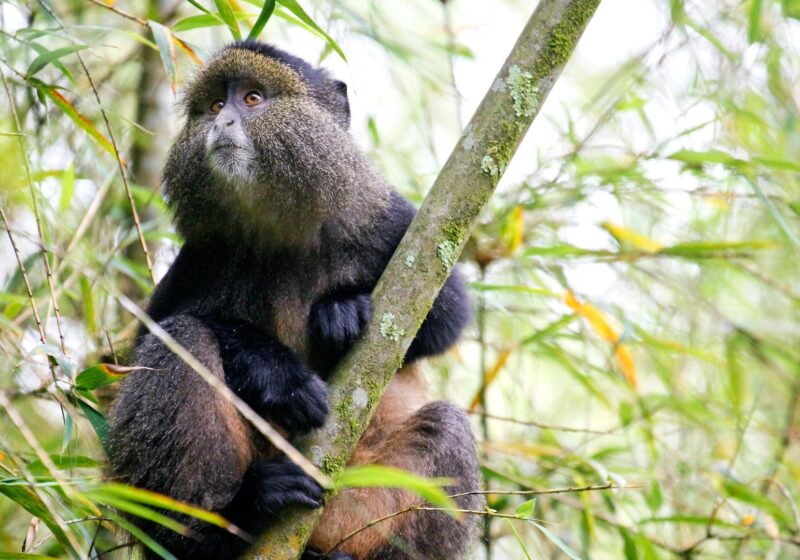 Adventure
Golden Monkey Trekking — Virunga Bamboo Forest
Volcanoes National Park, Rwanda
The Virungas' other great primate, and far easier to find.
Learn more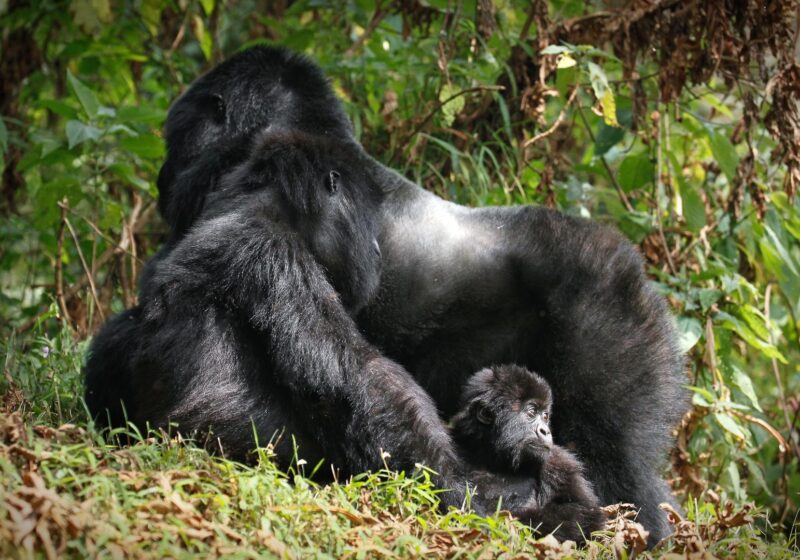 Adventure
Mountain Gorilla Trekking — Volcanoes National Park
Volcanoes National Park, Rwanda
One hour with a silverback. Nothing prepares you for it.
Learn more
Where we stay
in Rwanda.
Sanctuaries for this destination are being added.
When to go
to Rwanda.
June – September: Peak Dry Season
The best time for gorilla trekking — forest trails are drier, the vegetation slightly less dense, and the trek to find the gorilla families is generally shorter. Nyungwe and Akagera are also at their best. Permits sell out a year in advance for June–August; book early without exception. Temperatures at Volcanoes National Park altitude (2,400m) are cool year-round but particularly crisp in the dry season mornings.
December – February: The Short Dry Season
A good secondary window, particularly for visitors unable to secure June–September permits. Gorilla trekking operates year-round and the experience in the dry season is broadly comparable. Akagera is excellent in this period. Nyungwe’s canopy walkway is best visited when rain is less frequent.
March – May: The Long Rains
Rwanda’s wettest months. Gorilla trekking continues — the gorillas do not pause for the weather, and neither do the permits — but trails are muddier, leeches are more prevalent, and the trek to find the families can be longer and more physically demanding. Some visitors prefer the atmospheric quality of the wet forest. Permits are more readily available and some lodges offer reduced rates.
October – November: The Short Rains
Similar conditions to March–May but shorter and less intense. A viable window for experienced travellers comfortable with variable conditions. Birding in Nyungwe and Akagera is excellent as migratory species arrive.
Practical Notes
Getting There
Kigali International Airport (KGL) is Rwanda’s only international gateway and is well served from major African hubs and European cities. RwandAir operates direct services from London Heathrow, Brussels, Paris, and across Africa. Kenya Airways, Ethiopian Airlines, and Qatar Airways all connect through their respective hubs. Flying time: London approximately 8.5 hours direct. Kigali is also a natural connection point for Uganda itineraries via road or charter flight.
Gorilla Permits
Mountain gorilla permits in Rwanda are issued by the Rwanda Development Board and currently cost USD 1,500 per person per trek. Each permit allows one hour with one habituated gorilla family. A maximum of eight permits are issued per family per day. Permits must be booked well in advance — twelve months ahead for peak season — and cannot be transferred or refunded. We manage permit booking as part of every Rwanda itinerary.
Visas & Entry
Rwanda operates a visa-on-arrival policy for most nationalities, with the option to apply online before departure via the e-visa portal. East African Community citizens may enter visa-free. The process is straightforward and efficiently managed at Kigali airport.
Getting Around
Volcanoes National Park is a three-hour drive from Kigali on a good tarmac road. Nyungwe is approximately five hours from Kigali in the southwest. Akagera is three hours east. Charter flights between parks are available but not always necessary given Rwanda’s compact geography. Road transfers are comfortable, and the infrastructure is among the best-maintained in East Africa.
Health & Vaccinations
Yellow fever vaccination is required for entry. Anti-malarial medication is recommended for Akagera; the higher elevations of Volcanoes and Nyungwe are lower risk. Gorilla trekking regulations require visitors with respiratory illness symptoms to stand down — gorillas share approximately 98% of human DNA and are highly susceptible to human-transmitted diseases. This is a firm rule, enforced at the park gate.
What people ask
about Rwanda.
It varies considerably by day and by family. The trek to find the gorillas can last between one hour and seven hours depending on where the family has moved overnight. The terrain is steep, the altitude is between 2,400 and 3,000 metres, and the forest floor is uneven. Moderate fitness is required — not mountaineering fitness, but the ability to walk uphill for several hours at altitude. Porters are available for hire at the park headquarters and are strongly recommended; they carry bags, assist on difficult terrain, and the fee goes directly to local community employment.
One trek is transformative. Two treks — particularly if they are with different families in different terrain — add a dimension that a single visit cannot provide. Each gorilla family has its own character, its own dynamic, and its own relationship with the forest it occupies. We typically recommend two treks for any Rwanda itinerary of more than four nights, combining Volcanoes with either a Golden Monkey trek or a second gorilla family.
Both countries offer access to habituated mountain gorilla families in the same Virunga-Bwindi ecosystem. Rwanda's Volcanoes National Park is more accessible from Kigali, the lodge infrastructure around the park is generally more polished, and the permit process is well organised. Uganda's Bwindi Impenetrable Forest is wilder, the trekking more physically demanding, and the permits are less expensive. The gorilla experience itself is comparable. We frequently recommend combining both countries for visitors who want the full picture.
More than most itineraries allow time for. Nyungwe Forest's chimpanzee tracking and canopy walkway are genuinely world-class experiences. Akagera's rewilding story — Big Five game viewing in a park that had neither lion nor rhino fifteen years ago — is one of the most compelling in Africa. Kigali itself rewards a proper day of exploration: the genocide memorial, the coffee culture, the art scene, and one of the continent's most interesting contemporary restaurant scenes. Rwanda is a complete destination, not a one-experience country.
Easily, and it is the structure we recommend for most itineraries. Rwanda combines most naturally with Kenya — fly into Nairobi, take the Mara or Laikipia, then connect to Kigali for the gorillas — or with Tanzania, closing a Serengeti itinerary with three or four nights in the Virungas. Uganda is a natural extension, either overland or by charter, for those who want to combine Bwindi gorilla trekking with Volcanoes. The regional air connections are straightforward and well established.