
What we know
about Zambia.
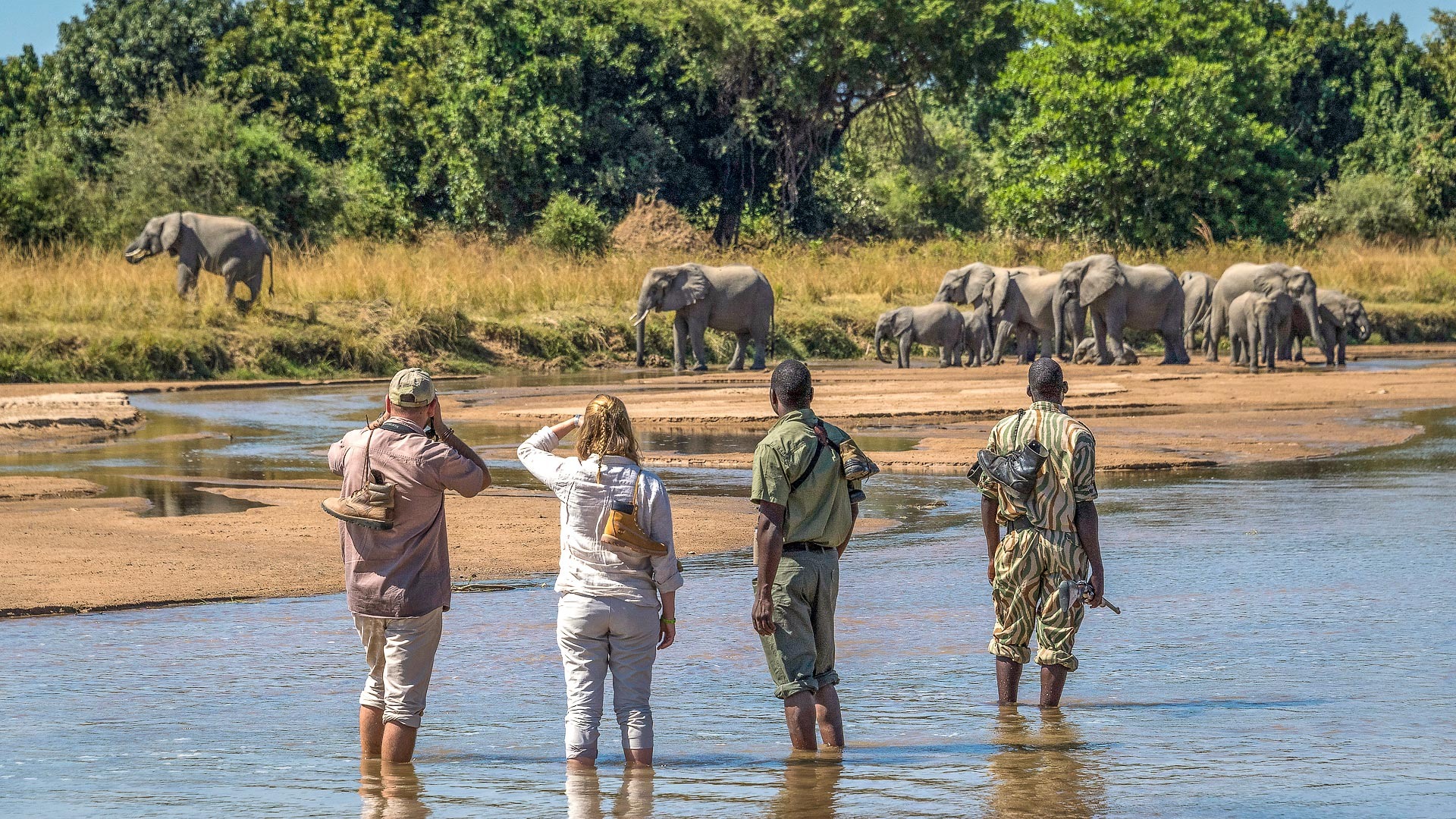
Zambia is where the walking safari was born. Norman Carr introduced the concept in the Luangwa Valley in the 1950s — the idea that the bush was best understood on foot, at the pace the terrain demanded, with a guide whose knowledge of the landscape was deep enough to make the experience safe and the encounter with wildlife genuinely reciprocal rather than observed from a distance. The South Luangwa National Park that Carr helped establish is still the finest walking safari destination in Africa, and the tradition he started has produced several generations of guides whose field knowledge and professional standards are the benchmark against which the rest of the continent measures itself.
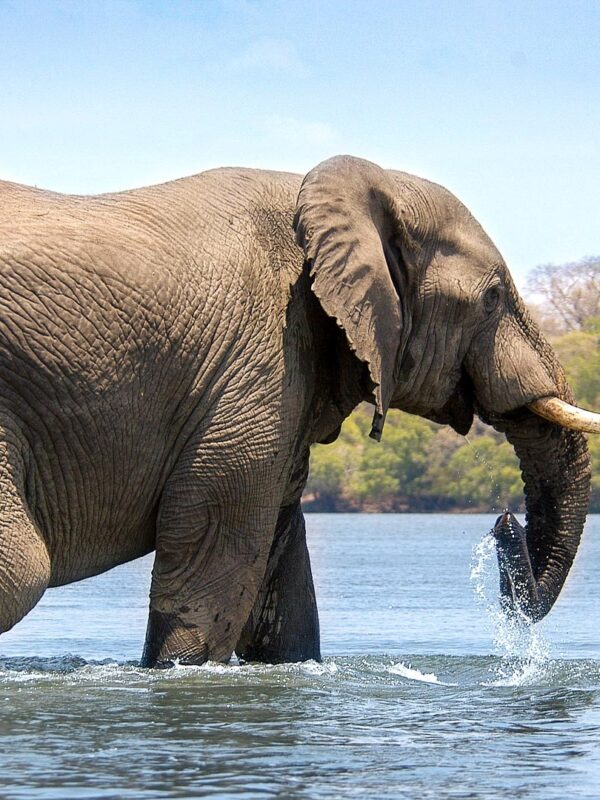
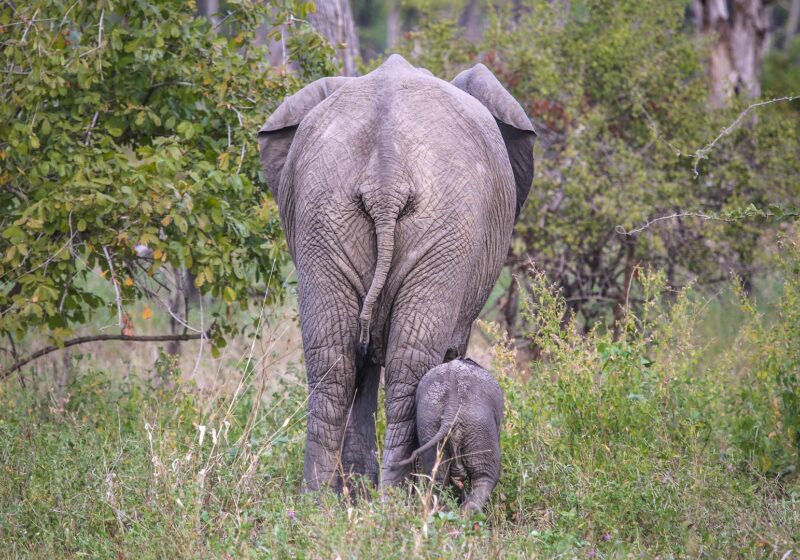
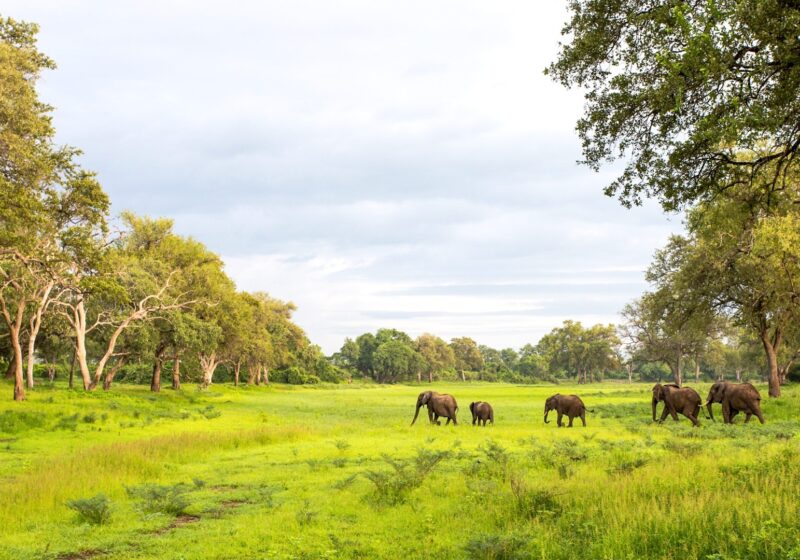
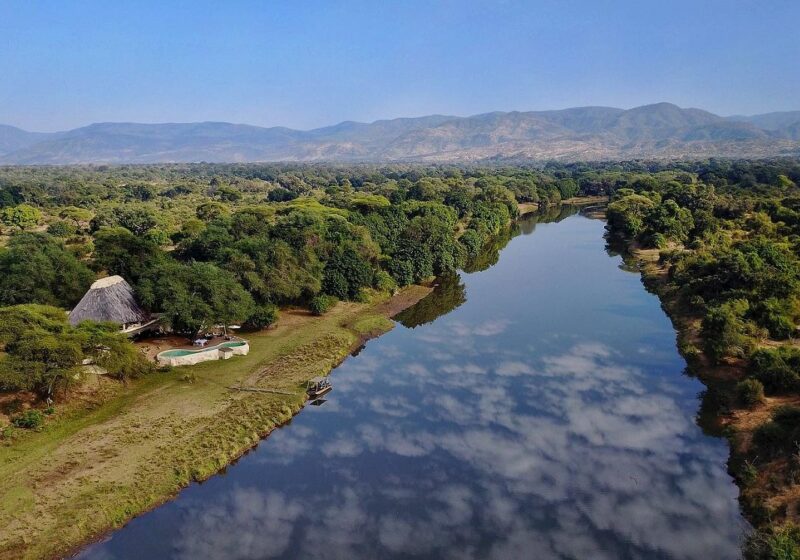
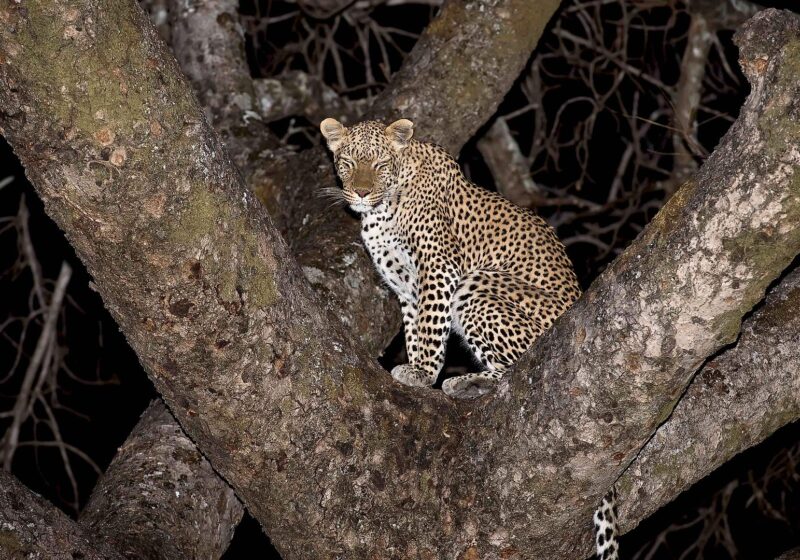
The Luangwa Valley is Zambia’s wildlife heartland — a geological rift running five hundred kilometres through the country’s east, the Luangwa River draining it northward into the Zambezi, its floodplains and oxbow lagoons sustaining one of Africa’s densest concentrations of game in a landscape of remarkable visual consistency. Ebony and sausage trees line the river banks. Elephant move between the water and the mopane woodland in herds that reach several hundred animals in the dry season. The leopard density in South Luangwa is the highest in Zambia and among the highest anywhere — the guides here know the individual animals and their territories with a precision that makes leopard sightings a matter of method rather than luck. Lion, wild dog, and hyena complete a predator profile that no other Luangwa resident can ignore.
West of the Luangwa Valley, the Kafue National Park covers twenty-two thousand square kilometres of miombo woodland, floodplain, and seasonally inundated grassland — the second-largest national park in Africa and one of the least visited relative to its size. The Busanga Plains in Kafue’s north flood completely in the wet season and dry to a vast open grassland between June and October, producing lion and cheetah sightings on a flat, treeless canvas that resembles the Serengeti in character and exceeds it in solitude. The Lower Zambezi National Park, on the river’s northern bank facing Zimbabwe’s Mana Pools across the water, completes Zambia’s safari circuit with canoe safaris, walking safaris, and the specific drama of a river landscape shared with one of Africa’s greatest parks on the opposite bank.
Zambia has never positioned itself as a mass-market safari destination and shows no signs of starting. The camps are small, the visitor numbers are low, and the conservation ethic that runs through every serious operator in the country produces a quality of experience that reflects a deliberate choice about what kind of tourism belongs here. Livingstone, on the Zambian bank of Victoria Falls, is the country’s most visited town and its most convenient gateway — a place that functions as a proper base for the falls, the Zambezi, and the wider region rather than simply a transit point. Zambia rewards the traveller who gives it time and arrives willing to be surprised by how much of Africa it still holds intact.
Where to go
in Zambia.
South Luangwa National Park
Mfuwe, Nsefu Sector, Tena Tena, Nkwali
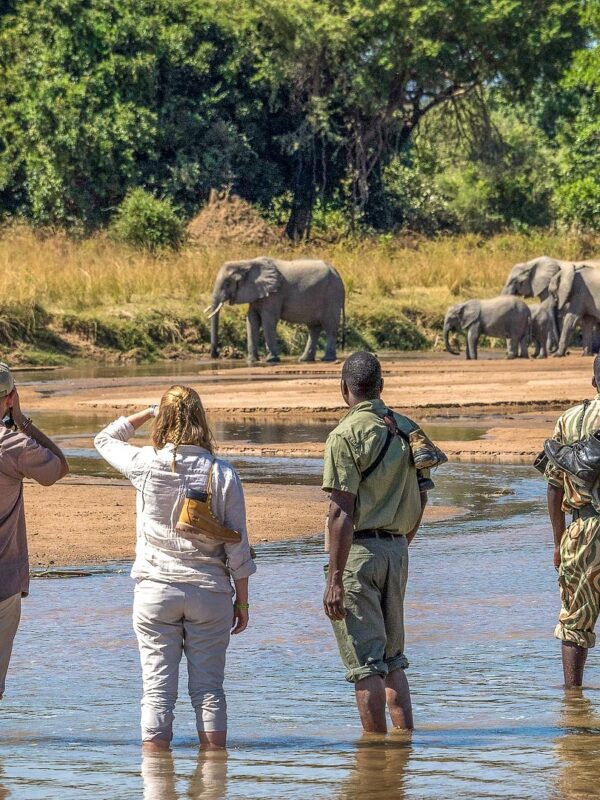
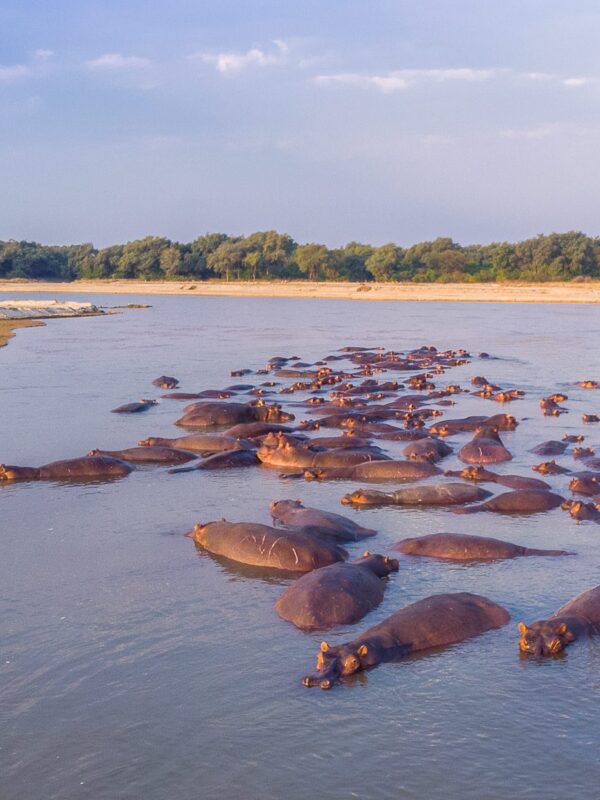
The birthplace of the walking safari and Zambia's most celebrated wildlife destination — a nine-thousand-square-kilometre park in the Luangwa Valley holding exceptional leopard, lion, wild dog, and elephant populations alongside the highest density of hippo of any river system in Africa. The private camps along the Luangwa River offer walking safaris of the highest standard, night drives revealing the valley's nocturnal dimension, and a quality of guiding that has defined the profession across the continent for sixty years.
North Luangwa National Park
Mwaleshi, Luangwa North
South Luangwa's wilder, less visited neighbour — a four-thousand-six-hundred-square-kilometre park with no permanent camps accessible by vehicle and a walking-only safari model that restricts access to those willing to cover the terrain on foot. Buffalo herds of several thousand animals move through North Luangwa's open woodland in the dry season, attended by lion prides of exceptional size. For visitors who have done South Luangwa and want to understand what the valley was before tourism arrived, North Luangwa is the answer.
Lower Zambezi National Park
Chiawa, Sapi, Mana Pools (facing), Mvuu
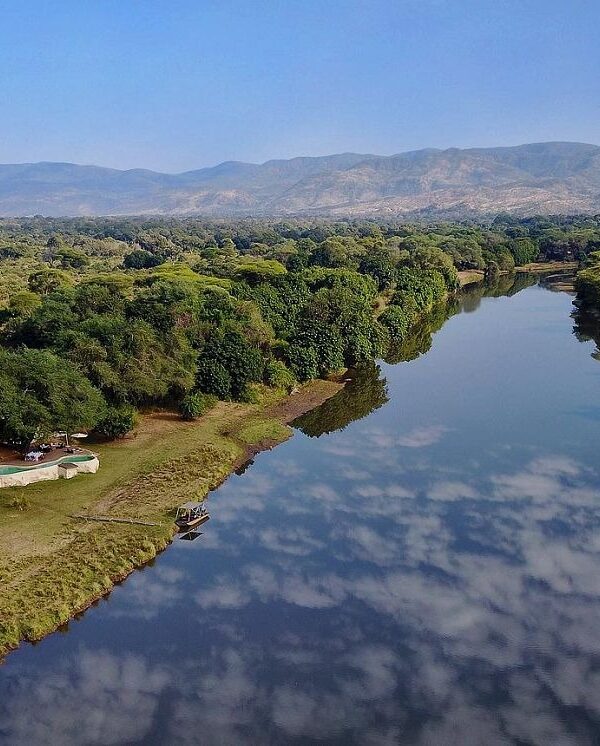
A four-thousand-square-kilometre park on the northern bank of the Zambezi facing Zimbabwe's Mana Pools across the river — the same wildlife, the same walking safari tradition, and the added dimension of canoe safaris on one of Africa's great rivers. The camps here are small, the concessions exclusive, and the combination of game drive, walking safari, and canoe in a single stay produces a multi-dimensional Zambezi experience that rewards a minimum of four nights.
Kafue National Park
Busanga Plains, Lufupa, Nanzhila, Kafue River
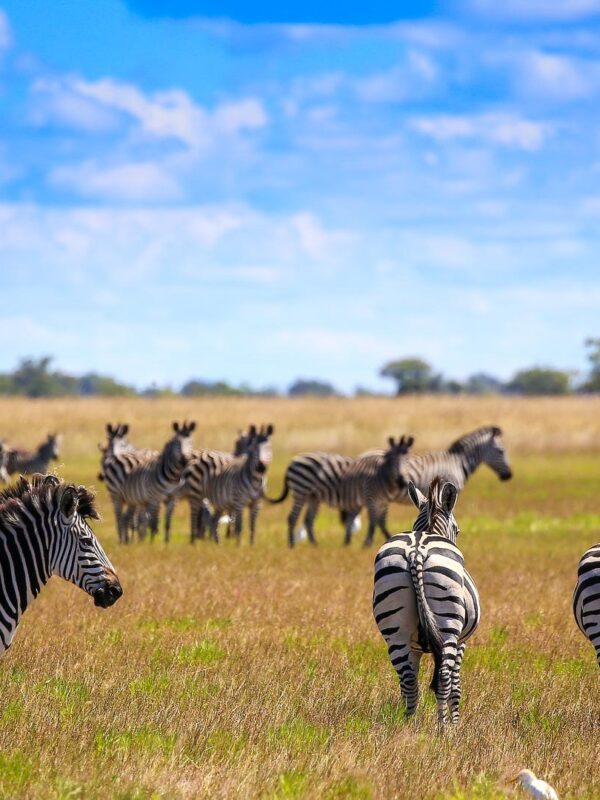
Africa's second-largest national park and one of its most biologically diverse — twenty-two thousand square kilometres of miombo woodland, river systems, and the Busanga Plains floodplain in the north. The Busanga Plains are Kafue's headline experience: a vast seasonal grassland accessible between June and October that holds the highest density of lion in Zambia, alongside cheetah, red lechwe, and sitatunga in a landscape of extraordinary openness. The camps here are among the most remote in Zambia.
Liuwa Plain National Park
Liuwa, Barotse Floodplain, Kalabo
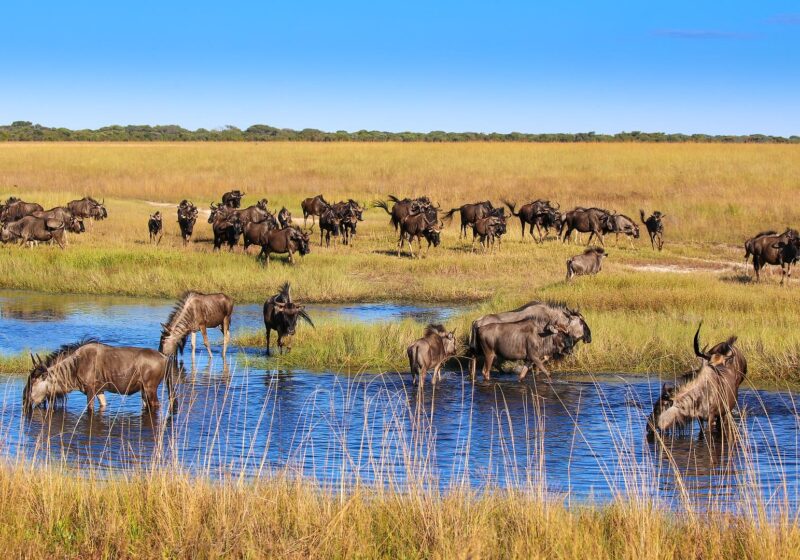
One of the most remote and least visited parks in Africa — a three-thousand-six-hundred-square-kilometre floodplain in western Zambia, managed by African Parks since 2003, holding the second-largest wildebeest migration on the continent. Between October and January, approximately forty thousand wildebeest move across the Liuwa Plain in a migration that has no tourist infrastructure around it and no vehicle concentrations to diminish it. For visitors who want to understand what the Serengeti was before the tourism industry found it, Liuwa is the reference point.
Livingstone & the Victoria Falls
Livingstone town, Mosi-oa-Tunya National Park, Batoka Gorge
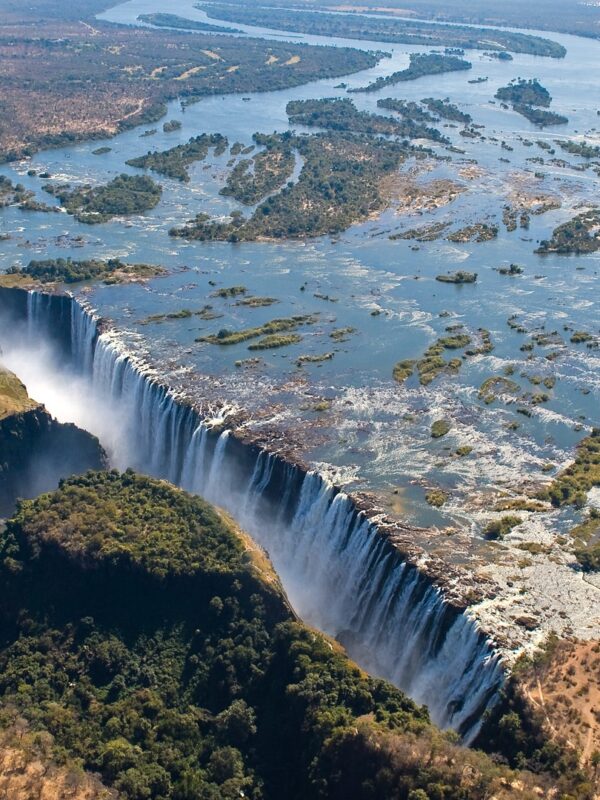
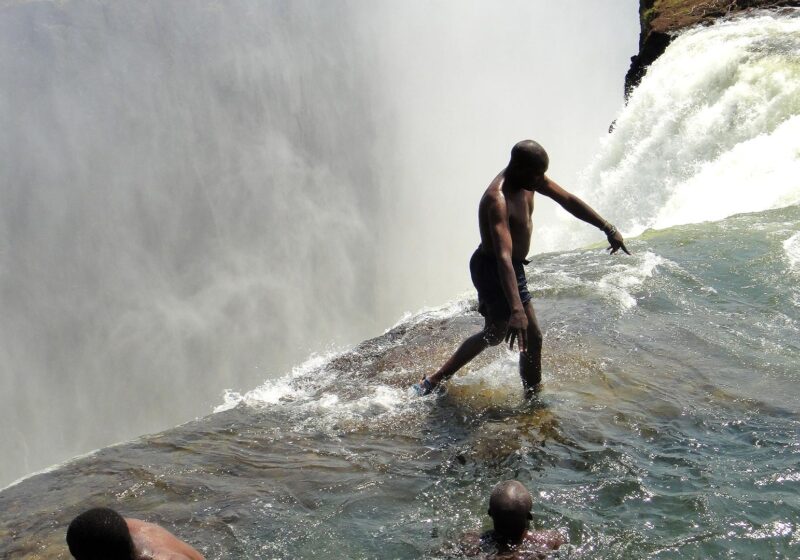
Zambia's tourism capital on the southern bank of the Zambezi, offering the Zambian perspective on Victoria Falls — the Devil's Pool at the lip of the falls accessible in low water season, the Batoka Gorge white-water rafting below, and a town with genuine character and a cafe and restaurant scene that has improved considerably in the past decade. Livingstone functions as a proper base rather than a transit point, and the Mosi-oa-Tunya National Park immediately upstream holds rhino on open ground accessible by game drive or walking safari.
Our Zambia
safaris.
Zambia safaris are being added. Check back shortly.
Where the animals
actually are.
What else
Zambia offers.
The experiences worth adding, or booking on their own. Wine country, scenic railways, cultural encounters — the parts of the country that most itineraries skip.
 Adventure
Devil’s Pool — Victoria Falls, Zambian Side
Livingstone Island, Victoria Falls, Zambia
Swimming at the lip of the world's largest waterfall.
Learn more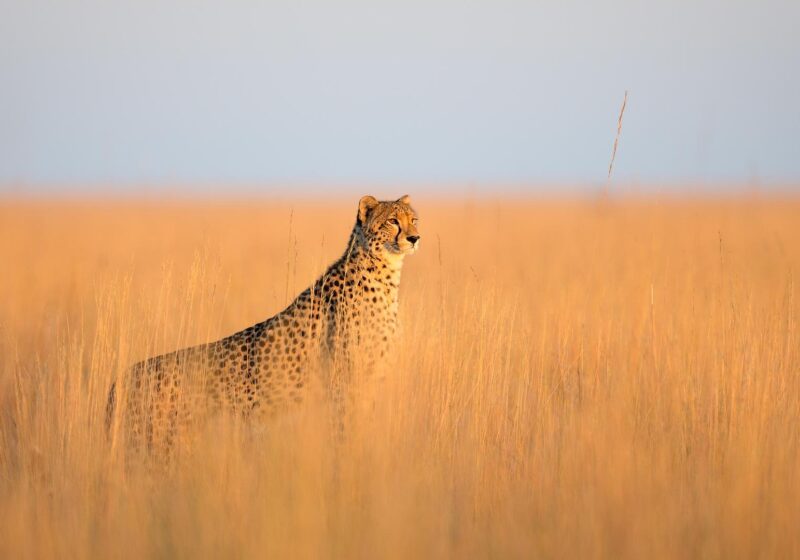 Scenic
Busanga Plains — Lion & Cheetah on Open Ground
Busanga Plains, Kafue National Park, Zambia
Kafue's secret. The Serengeti without the audience.
Learn more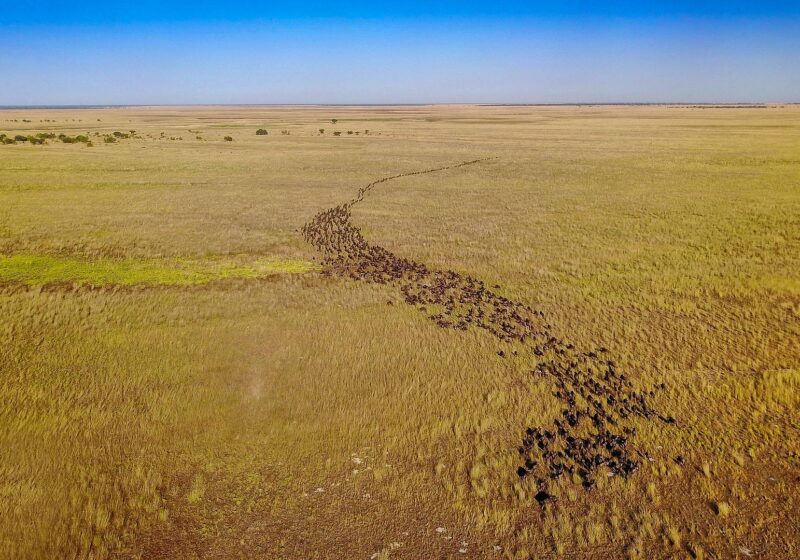 Scenic
Liuwa Plain Migration — Western Zambia
Liuwa Plain National Park, Western Zambia
Africa's second migration. One camp. No other vehicles.
Learn more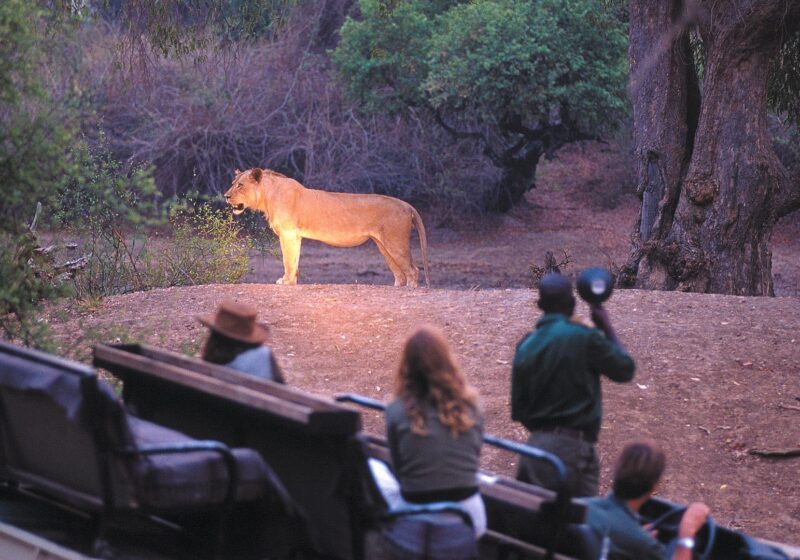 Adventure
Night Safari — South Luangwa National Park
South Luangwa National Park, Zambia
South Luangwa after dark is a different park entirely.
Learn more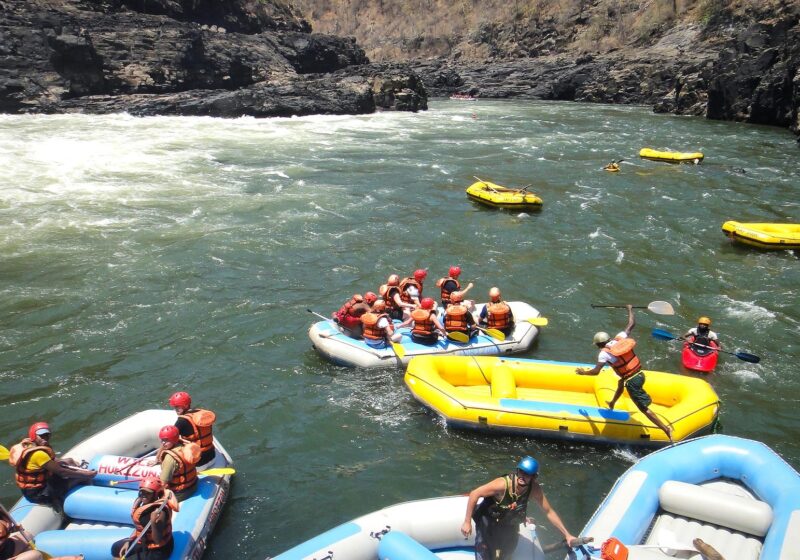 Adventure
Canoe Safari — Lower Zambezi National Park
Lower Zambezi National Park, Zambia
The Zambezi at water level. Zimbabwe on the far bank.
Learn more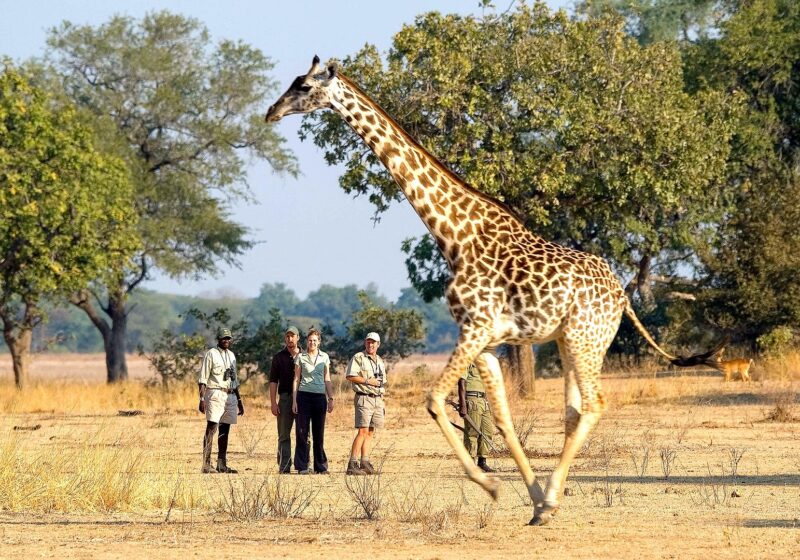 Adventure
Walking Safari — South Luangwa National Park
South Luangwa National Park, Zambia
Where the walking safari began. Still the best place to do it.
Learn more
Where we stay
in Zambia.
Sanctuaries for this destination are being added.
When to go
to Zambia.
May – October: The Dry Season
Zambia’s prime safari season across all parks. Vegetation thins, wildlife concentrates around permanent water, and the walking safari conditions in South Luangwa and the Lower Zambezi reach their annual peak. The Busanga Plains in Kafue are accessible from June. North Luangwa’s walking season runs from May to October. South Luangwa’s night drives are productive from May onwards as the bush opens up. Book the best camps twelve months ahead for July and August.
June – August: Peak Dry Season
The optimal window combining the best wildlife viewing conditions with the most comfortable temperatures. The Luangwa Valley can be extremely hot in October; June and July offer cooler mornings and evenings with excellent game viewing throughout. The Busanga Plains are at their best in July and August when the last of the seasonal water has dried, and the lion concentrations are at their most visible.
November – April: The Green Season
Most South Luangwa and Lower Zambezi camps close between November and April. Kafue’s Busanga Plains are inaccessible. The Liuwa Plain wildebeest migration runs from October to January — the one green season experience that justifies the logistics. South Luangwa’s Nkwali and a handful of year-round camps offer reduced rates and exceptional birding as the summer migrants arrive. Not recommended for first-time visitors.
Practical Notes
Getting There
Kenneth Kaunda International Airport in Lusaka (LUN) is Zambia’s main international gateway, connecting to Johannesburg, Nairobi, Addis Ababa, Dubai, and London on multiple carriers. Harry Mwanga Nkumbula Airport in Livingstone (LVI) connects directly to Johannesburg and is the preferred entry point for Victoria Falls and Lower Zambezi itineraries. Flying time: London to Lusaka, approximately 10 hours via Johannesburg or Nairobi hub.
Visas & Entry
Zambia operates a visa-on-arrival system for most nationalities. The KAZA UniVisa covers both Zambia and Zimbabwe and is strongly recommended for any itinerary crossing both countries — available at Livingstone and Victoria Falls airports and at the land border. Single-entry visas are available for Zambia-only itineraries. Your consultant will confirm current requirements at the time of booking.
Getting Around
Light aircraft charter is the standard movement between Zambia’s safari areas — the distances between Lusaka, South Luangwa, Lower Zambezi, Kafue, and Livingstone make road transfer impractical for most itineraries. Proflight Zambia and a network of charter operators cover all major safari destinations. Drive times within a single park are generally manageable; crossing parks by road is not recommended. The Lower Zambezi is accessible by road transfer from Lusaka in approximately four hours.
Health & Vaccinations
Anti-malarial medication is strongly recommended for all safari regions. Yellow fever vaccination is required if arriving from an endemic country and strongly recommended regardless. The Luangwa Valley and Lower Zambezi are high-risk malaria zones; consult a travel health clinic at least six weeks before departure. Zambia’s tap water is not reliably safe; all camps provide filtered or bottled water.
Currency
Zambian Kwacha (ZMW). U.S. dollars are widely accepted at camps, lodges, and in Livingstone. Most camps are fully inclusive. ATMs are available in Lusaka and Livingstone; limited elsewhere. Bring sufficient USD cash for tips and any town purchases.
What people ask
about Zambia.
Two things: the quality of the guides and the wildness of the parks they operate in. The walking safari tradition in Zambia goes back to Norman Carr's pioneering work in the Luangwa Valley in the 1950s, and the professional guide training that tradition produced has been refined over sixty years into the most demanding and most respected qualification in the industry. The parks themselves — South Luangwa, North Luangwa, the Lower Zambezi — are large enough and lightly visited enough that the walking experience retains a quality of genuine wilderness that parks in Kenya or Tanzania cannot match. Walking in Zambia feels like what it is: moving through an ecosystem on its own terms.
South Luangwa is the more accessible and more comprehensively supported of the two — a range of excellent camps, vehicle-based game drives alongside walking safaris, and reliable wildlife viewing throughout the dry season. North Luangwa has no permanent road-accessible camps and operates on a walking-only model, meaning the experience is physically more demanding and logistically more complex. The wildlife in North Luangwa — particularly the large buffalo herds and the lion prides that follow them — is outstanding. We recommend South Luangwa for first Zambia visits and North Luangwa for those returning specifically for the walking safari tradition at its most uncompromised.
Yes, and the Lower Zambezi and Mana Pools combination is one of the most satisfying structures in southern African safari travel. The two parks face each other across the same stretch of the Zambezi — the same river, the same wildlife moving between the two banks, the same walking and canoe safari tradition operating from opposite shores. The KAZA UniVisa covers both countries. A combined itinerary of four nights in the Lower Zambezi and four nights in Mana Pools, connected by a short charter flight or river crossing, is one of the most complete Zambezi experiences available.
The Liuwa Plain wildebeest migration involves approximately forty thousand animals moving across a three-thousand-six-hundred-square-kilometre floodplain in western Zambia between October and January. It is the second-largest wildebeest migration in Africa after the Serengeti-Mara system. The comparison that matters most is not the number of animals — the Serengeti migration is an order of magnitude larger — but the conditions in which it takes place. Liuwa has one camp, minimal tourist infrastructure, and no vehicle concentrations. The migration here looks the way the Serengeti migration looked fifty years ago: animals moving through empty landscape, no other vehicle visible, the experience entirely unmediated.
A minimum of seven nights for a single park — South Luangwa alone justifies a week and rewards staying longer. A combined South Luangwa and Lower Zambezi itinerary needs at least ten nights to do both justice. Adding Kafue or Liuwa requires fourteen nights minimum. Zambia is a destination that punishes the visitor who rushes it — the walking safaris require time to build in depth, and the best moments tend to arrive on the fourth and fifth morning when the bush has started to feel familiar.