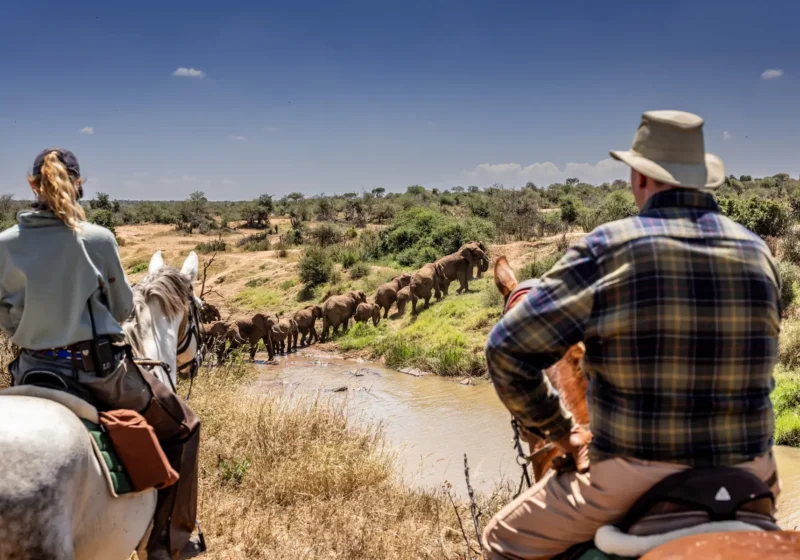
 Adventure
Laikipia by Horseback
Laikipia Plateau, Kenya
The only way to move through wildlife at eye level.
Learn more
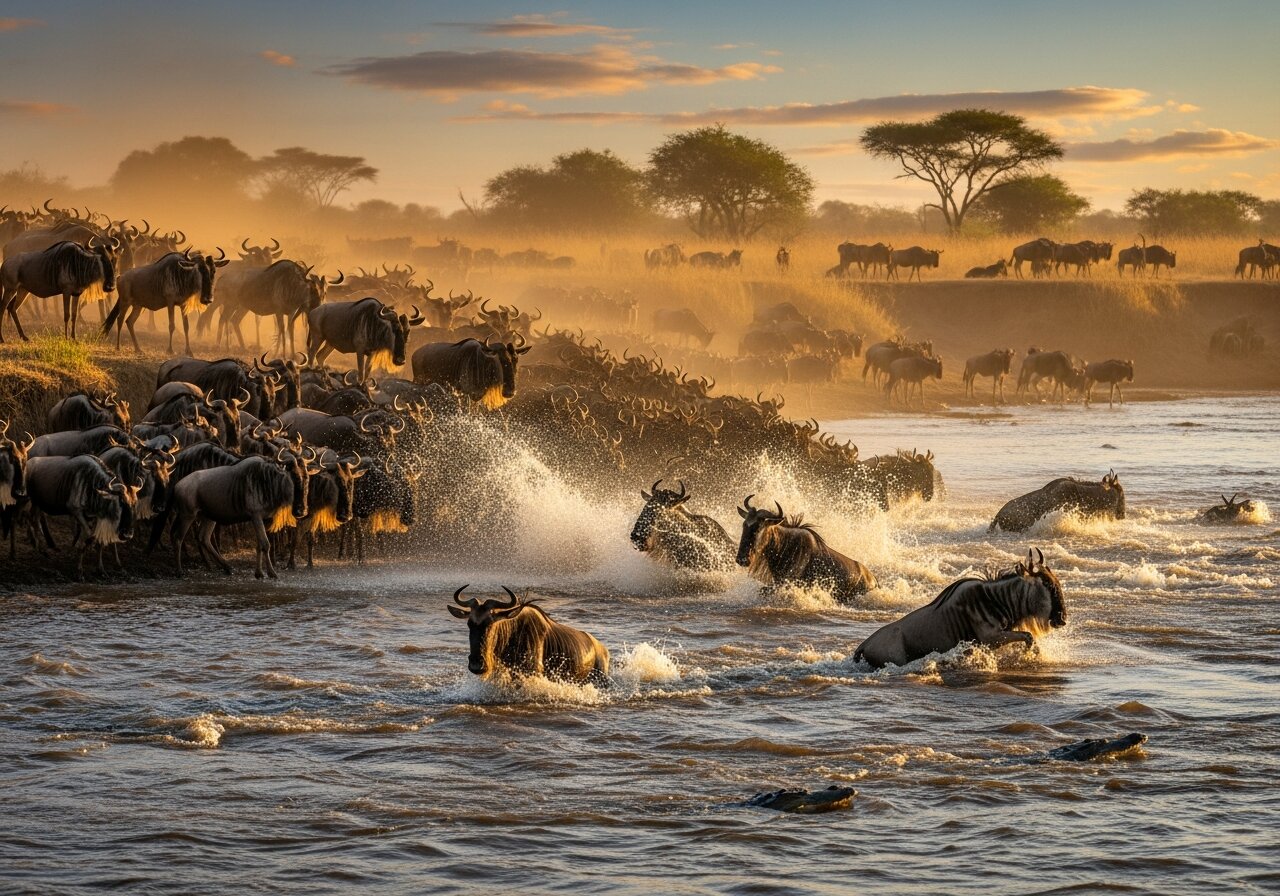
The Maasai Mara migration crossing season runs from mid-July through October, and the itinerary built around it is one of the most sought-after safari structures in East Africa for a reason that any honest account must acknowledge: it delivers. Two million wildebeest, driven north by the seasonal grass flush of the Mara’s short-grass plains, press against the Mara River in columns that can hold for hours before the first animal commits. When they go, they go together, the crocodiles moving from the margins, the far bank becoming a wall of noise and scrambling animals, and the guides who have positioned themselves correctly in the preceding hours watch it with the same attention as the guests, because no crossing is the same as the one before it.
This itinerary places guests in two of the greater Mara ecosystem’s most celebrated private conservancies, Naboisho and the Mara Triangle, chosen for the combination of migration access, resident predator quality, and vehicle exclusivity that the national reserve’s public areas cannot provide. The Naboisho Conservancy, in the Mara’s east, holds one of the highest lion densities of any private conservancy in Africa and offers the full range of activities, night drives, bush walks, and off-road driving that the reserve’s regulations prevent. The Mara Triangle, operated by the Mara Conservancy on the reserve’s western sector, provides direct access to the most productive section of the Mara River for crossings between July and October, with considerably fewer vehicles than the main reserve’s eastern and central areas.
Seven nights is the minimum required to do the migration season justice. The crossings are not predictable — the herds can sit on the southern bank for three days before committing, or produce two crossings in a single morning. A seven-night stay provides enough consecutive mornings at the river to make the probability of witnessing a crossing as high as the season’s inherent unpredictability allows, while the conservancy days away from the river ensure that the trip is a complete safari rather than a vigil beside a river bank.
Arrive at Nairobi's Jomo Kenyatta International Airport and connect by scheduled domestic flight to the Mara North airstrip — approximately forty-five minutes from Wilson Airport, departing on Safarilink or ALS at mid-morning. A camp vehicle meets the flight and drives into the Naboisho Conservancy, often producing the first game sightings within minutes of the airstrip. Afternoon tea on arrival at camp, followed by the first game drive of the journey through the conservancy's open grassland and seasonal drainage lines. The Naboisho resident lion prides are typically located within the first afternoon — the conservancy's relatively small size and the guides' daily monitoring of pride movements making lion sightings here a matter of method rather than fortune. Dinner in the mess tent or around the fire.
Three full days in the Naboisho Conservancy — the eastern Mara's most exclusive private land, accessed only by the guests of its handful of small camps. Morning game drives depart at first light, tracking the conservancy's resident prides and the cheetah families whose territories overlap with the lion ranges on the open grassland. The migration herds move through Naboisho between August and October on their way north to the Mara River — when they are present the conservancy's open terrain allows game drives that follow the herds' movement and the predator activity around them for hours at a time. Night drives available every evening, revealing the conservancy's nocturnal character — aardvark, civet, genet, and the specific quality of the Mara night that the daytime safari does not prepare you for. Bush walks with a qualified trails guide available on request.
Morning game drive, brunch, and light aircraft transfer across the Mara River to the Mara Triangle airstrip — a fifteen-minute flight that crosses the river itself and delivers a bird's-eye view of the migration herds on the plains below if the season is right. The Mara Triangle is the western section of the Maasai Mara National Reserve, managed by the Mara Conservancy — a non-profit operation whose ranger force and anti-poaching programme has made the Triangle consistently the best-maintained and least-crowded section of the reserve. Afternoon arrival and immediate game drive toward the river, where the crossing monitoring begins in earnest. The Triangle's camp positions provide access to the Mara River's most productive crossing points within twenty minutes of camp.
Two days focused on the Mara River crossing experience — early morning departures to the river, positioning at the crossing points identified by the guides the previous evening, and the patient, attentive waiting that the crossing season requires. The Triangle's guides have been working this section of the river for decades and understand the herds' crossing behaviour — the specific points on the southern bank where the animals congregate, the wind directions that encourage or delay a crossing, and the crocodile positions that the herds are reacting to from a distance before the human observer has noticed them. On days without a crossing the game drive continues across the Triangle's open grassland — resident elephant, lion, and cheetah providing the alternative to the river vigil. Final morning game drive, brunch, and transfer to the Mara airstrip for the scheduled flight back to Nairobi and onward international connections.
These can be woven into your safari or treated as standalone days. Tell us which ones move you.
Adventure
Laikipia Plateau, Kenya
The only way to move through wildlife at eye level.
Learn more Scenic
Lamu Archipelago, Kenya Coast
The oldest trade route in the Indian Ocean, still sailing.
Learn more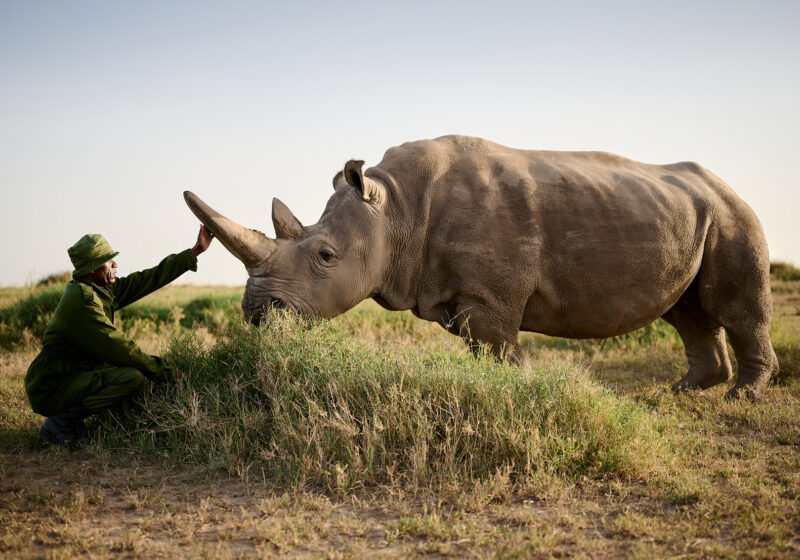 Adventure
Ol Pejeta Conservancy, Laikipia, Kenya
The last two northern white rhinos on earth live here.
Learn more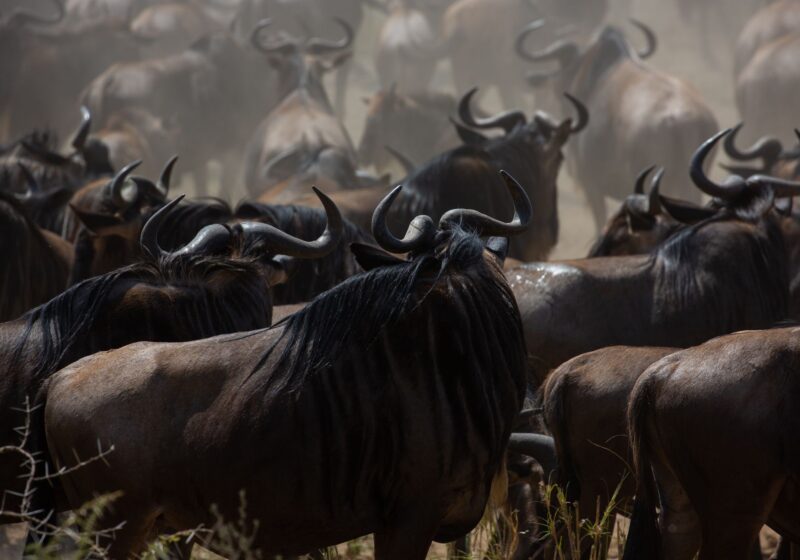 Scenic
Southern Serengeti & Ndutu Plains, Tanzania
Half a million wildebeest calves born in six weeks.
Learn moreEvery detail — camps, guides, pace, timing — is adjusted to your group and this particular moment. Begin with a conversation.