
The Park
What makes
What makes
Lower Zambezi National Park.
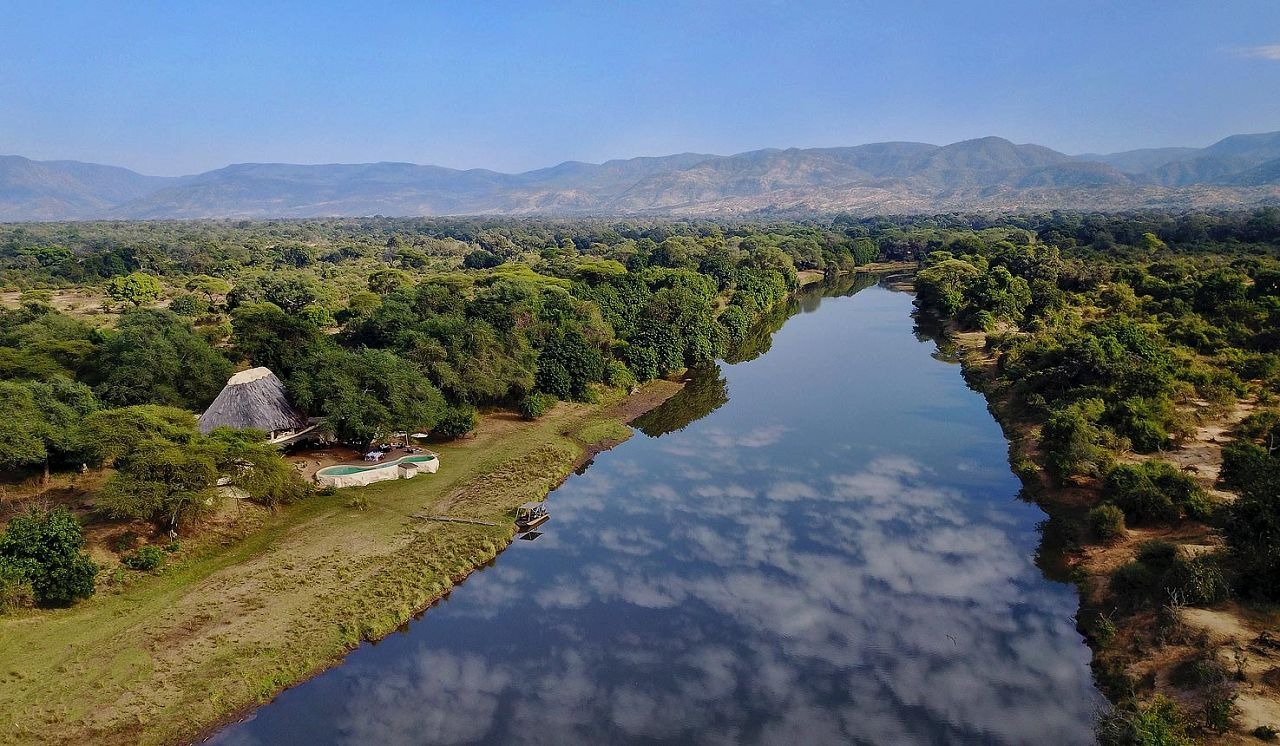
The Lower Zambezi National Park occupies four thousand square kilometres of the Zambezi’s northern bank between Chirundu and the Mozambican border — a narrow corridor of riverine forest, open floodplain, and escarpment woodland that faces Zimbabwe’s Mana Pools across the same stretch of river and shares with it the same wildlife, the same walking safari tradition, and the same quality of wilderness that makes the middle Zambezi valley the most concentrated expression of southern Africa’s safari character in a single geographical feature. The two parks are mirror images in some respects — the same elephant population swimming between the banks, the same lion prides drinking from the same river, the same leopard working the same riverine forest on opposite shores — and entirely distinct in others. The Lower Zambezi’s escarpment provides a vertical dimension that Mana Pools’ flat floodplain does not. The Zambian side’s canoe safari tradition is older and more developed. The camps are smaller and the concessions more exclusive.
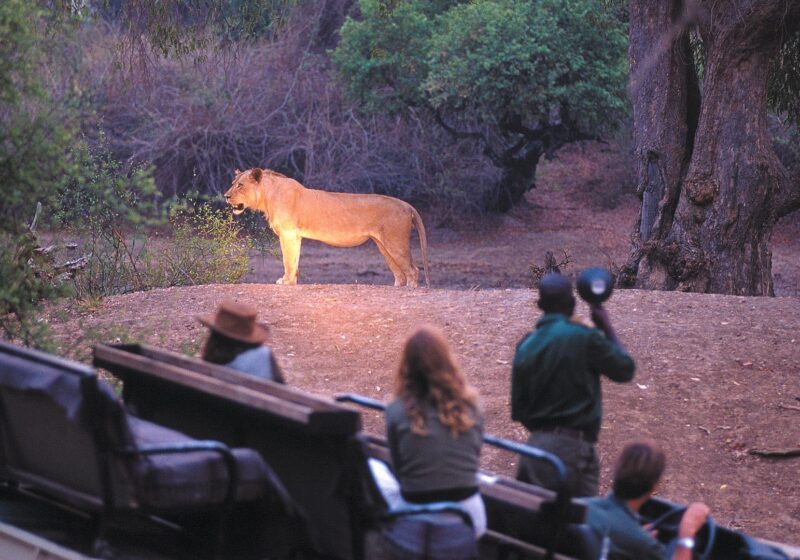
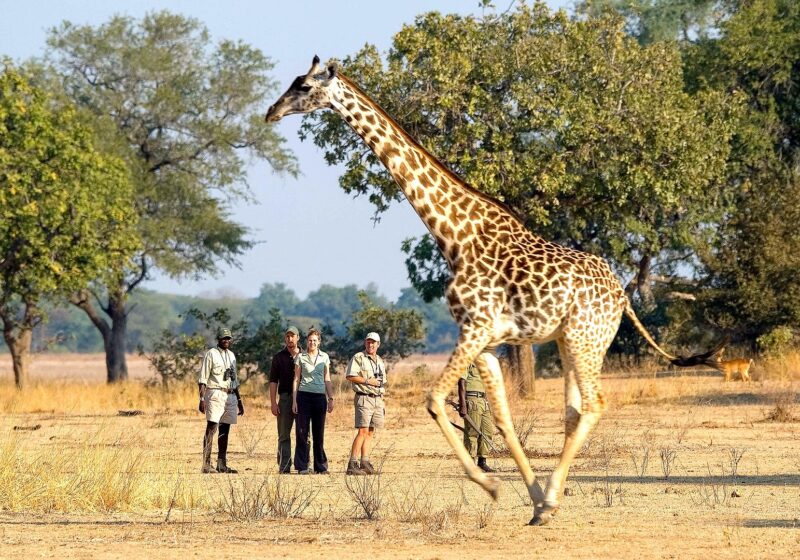
The river is the experience. Game drives along the Zambezi bank produce wildlife viewing of exceptional quality — elephant at the water’s edge in groups of fifty and sixty, buffalo crossing the shallows at dawn, lion moving along the tree line in the early morning — but the Lower Zambezi’s defining activities are conducted on and in relation to the water itself. Canoe safaris move through hippo pods and past crocodile banks with a silence and a proximity that no vehicle achieves on land. Walking safaris along the river bank produce encounters with elephant and buffalo at distances that the vehicle-based parks of East Africa would not permit. And the fishing — tiger fish on the Zambezi’s fast water, bream in the quieter channels — has its own serious following among visitors who combine wildlife and angling in a single itinerary.
The escarpment that rises behind the camp corridor provides the park’s second wildlife zone — a steeper, drier, more thicketed landscape of jesse bush and mopane woodland that holds leopard, buffalo, and the elephant herds that move between the river and the higher ground through the night. Game drives into the escarpment produce a different quality of encounter from the riverine zone below — more difficult terrain, denser vegetation, and the particular character of a landscape that sees fewer vehicles and has calibrated its wildlife accordingly. The best Lower Zambezi itineraries combine both zones: mornings on the river by canoe or on foot, afternoons in the escarpment by vehicle, evenings back at the camp with the river in front and the stars above.
Key Wildlife
Elephant, lion, leopard, hippo, crocodile, buffalo, wild dog, zebra, impala, puku, waterbuck, tigerfish, African fish eagle, carmine bee-eater
Best Time to Visit
May–October (dry season); June–September optimal for canoe safaris, walking safaris, and escarpment game drives; September–October for carmine bee-eater colonies and tiger fishing
Best For
Canoe safari enthusiasts, walking safari specialists, returning safari-goers, those combining with South Luangwa or Zimbabwe's Mana Pools, anglers, photographers
Add to Your Journey
Experiences worth
Experiences worth
adding.
These can be woven into your safari or treated as standalone days. Tell us which ones move you.
1 / 6
Lower Zambezi National Park is best understood
from inside it.
We have worked in Lower Zambezi National Park long enough to know which camps earn their place, which guides change how you see things, and when to be there. Let's talk.