
The Park
What makes
What makes
Mahale Mountains National Park.
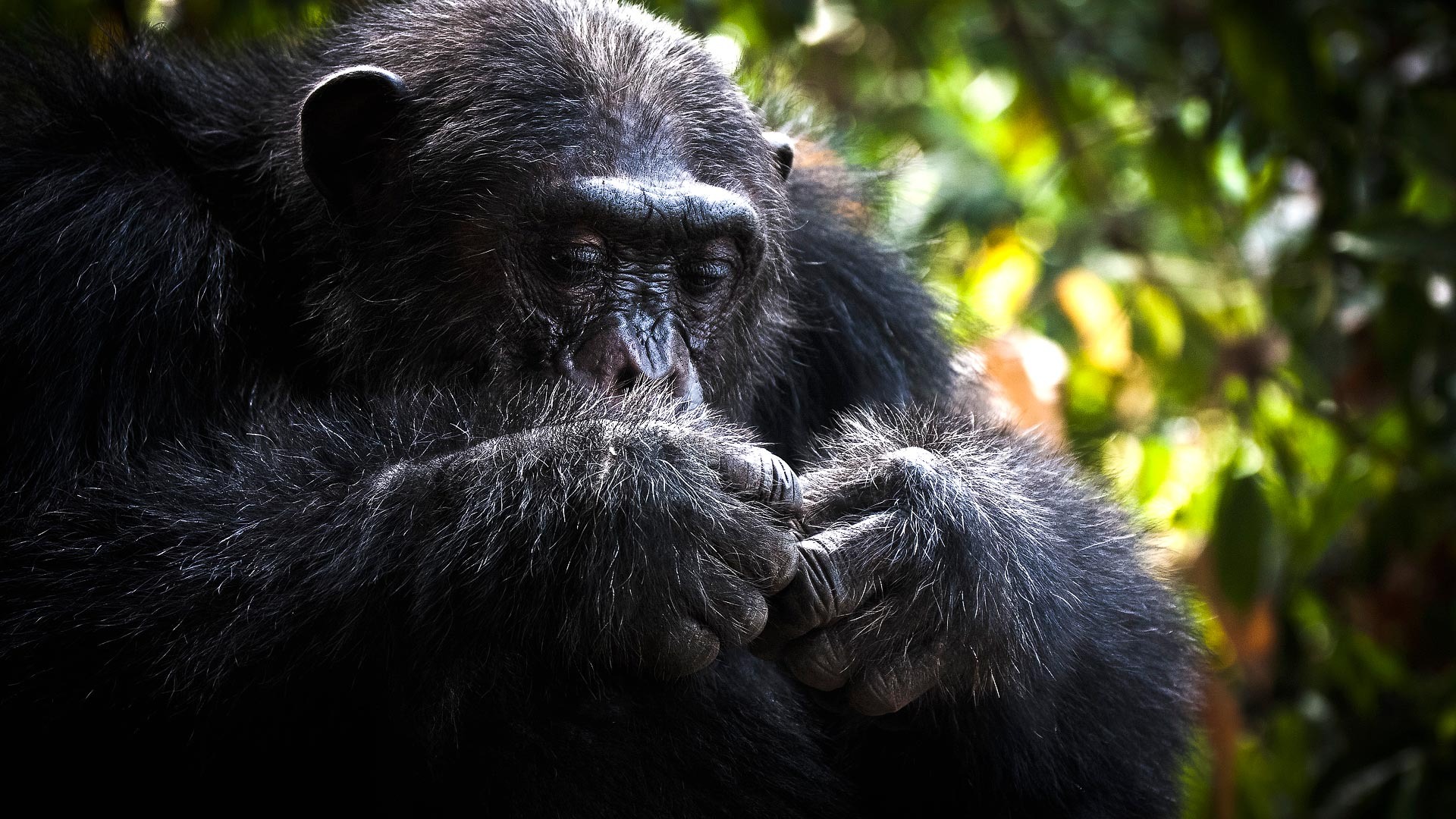
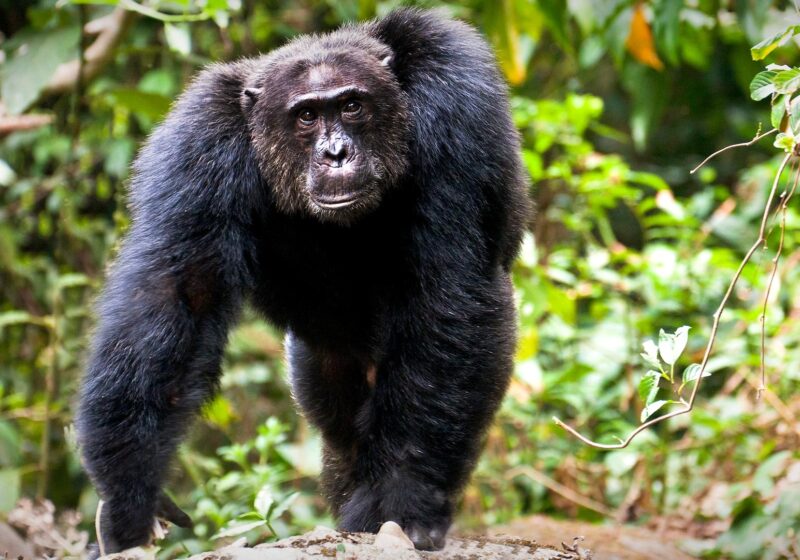
Mahale Mountains National Park occupies a peninsula on the eastern shore of Lake Tanganyika in Tanzania’s remote far west — a place that requires two flights and a boat transfer to reach, has no roads, no airstrip tarmac, and no infrastructure beyond a handful of camps that together hold fewer than fifty guests at any one time. The park was established partly to protect the chimpanzee population that Japanese primatologist Toshisada Nishida began studying here in 1965, a research programme that has now run continuously for six decades and produced one of the most detailed records of wild chimpanzee behaviour ever compiled. The habituation that research produced is what makes Mahale’s chimpanzee tracking the most intimate in the world.
The Mahale Mountains rise sharply from the lakeshore to over 2,400 metres, their slopes covered in a sequence of forest types — lowland riverine, montane, bamboo — that support not only chimpanzees but colobus monkey, red-tailed monkey, and a bird list that rewards serious ornithologists. The tracking itself begins at dawn, following rangers who have been monitoring the previous day’s sleeping trees, and moves through a forest that is steep, wet, and alive in every direction. Finding the M-group — the habituated community of roughly sixty individuals that is the subject of the long-term research — can take twenty minutes or most of a morning. The hour you are allowed with them, once found, passes in a way that no other hour on safari does.
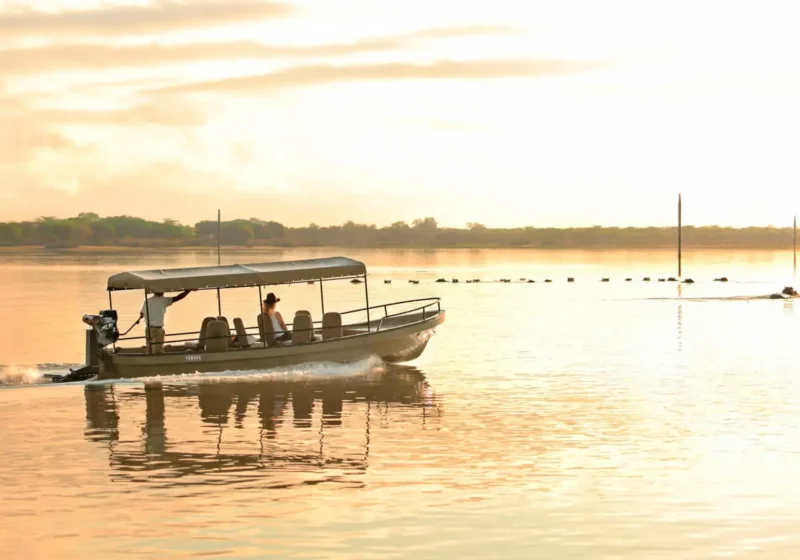
Lake Tanganyika adds a dimension that no other chimpanzee destination offers. The lake is the world’s longest freshwater body, its deepest after Baikal, and its water is warm, clear, bilharzia-free, and full of endemic cichlid species found nowhere else on earth. The afternoon rhythm at Mahale — track chimps in the morning, swim and snorkel in the lake before lunch, rest through the heat, kayak along the shoreline at dusk — is one of the most genuinely restorative itinerary structures in African travel. Guests who come for three nights consistently wish they had booked five.
Key Wildlife
Chimpanzee, red colobus monkey, red-tailed monkey, bushbuck, elephant, leopard, endemic cichlid fish, olive sunbird, African fish eagle
Best Time to Visit
May–October (dry season); June–October optimal for forest trails, chimp tracking, and lake swimming conditions
Best For
Experienced travellers seeking genuine remoteness, primate specialists, those combining with Katavi western circuit, photographers, anyone who has exhausted the conventional safari and wants something categorically different
Add to Your Journey
Experiences worth
Experiences worth
adding.
These can be woven into your safari or treated as standalone days. Tell us which ones move you.
1 / 6

Mahale Mountains National Park is best understood
from inside it.
We have worked in Mahale Mountains National Park long enough to know which camps earn their place, which guides change how you see things, and when to be there. Let's talk.