

The Park
What makes
What makes
Ngorongoro Crater.
The Ngorongoro Crater is not a national park. It is a conservation area — a distinction that matters, because the Maasai have grazed cattle on the crater floor alongside the wildlife since the colonial boundaries were drawn, and the tension between those two land uses is part of the place’s story. What it is, physically, is the largest intact and unflooded volcanic caldera on earth: twelve kilometres across, six hundred metres deep, and enclosing a self-contained ecosystem that has been operating in relative isolation for several hundred thousand years. The animals that live inside it largely stay inside it. The walls are the world.
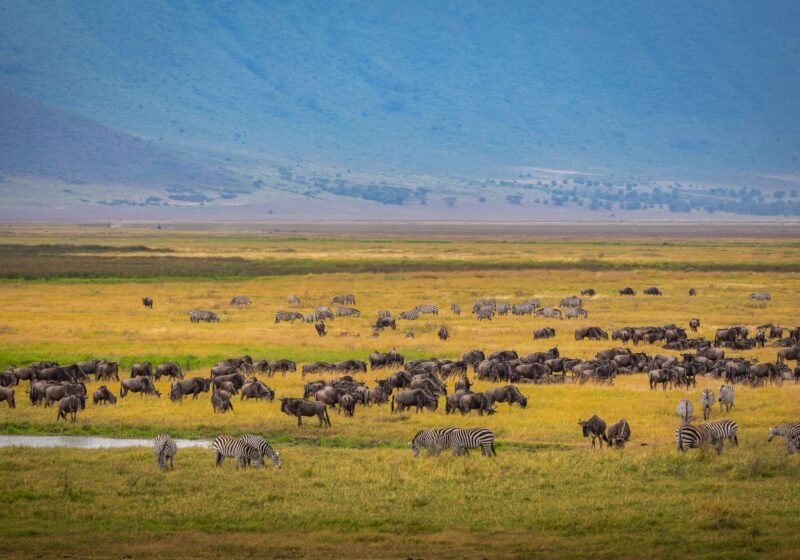
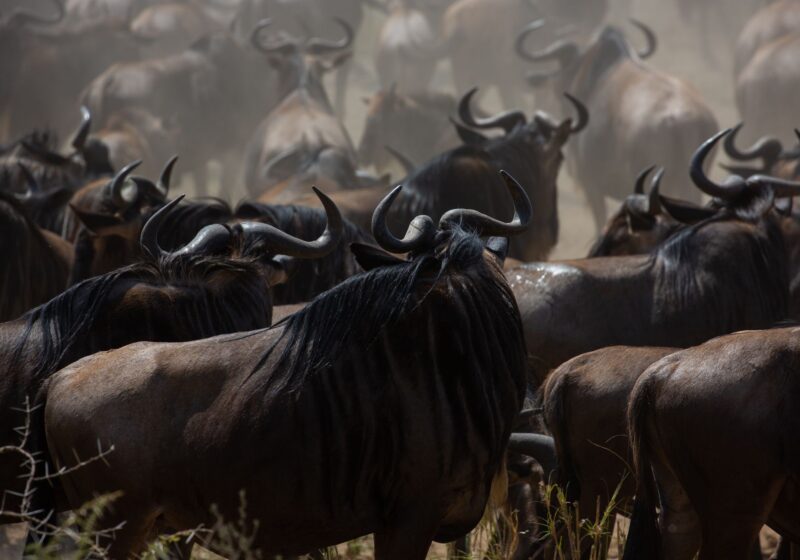
The wildlife density on the crater floor is a function of that enclosure. Prey species — wildebeest, zebra, buffalo, eland, Thomson’s gazelle — have nowhere to disperse to, which means the predator populations they sustain are compressed into an area small enough to cover in a single long day. The lion prides here are among the most studied in Africa; the individuals are known by name to the guides who work the floor daily. Black rhino — scarce elsewhere in Tanzania, functionally absent from most of the Serengeti — are a genuine possibility for sighting in the crater’s short-grass areas and along the Lerai Forest margins, where a small but stable population moves under armed ranger escort.
The crater floor sits at 1,800 metres above sea level, which makes it cooler than the Serengeti plains to the north and produces a quality of morning light — low, angled, cutting across the soda lake in the crater’s centre — that is unlike anything in the lowland parks. The flamingos that wade the lake’s alkaline shallows turn the water pink at certain angles and certain hours. The hippo pool on the western floor produces its own particular theatre. And the descent roads, steep and dramatic, offer twenty minutes of one of the most visually arresting approaches to a game-viewing area anywhere in Africa — the crater walls dropping away below the vehicle, the floor materialising two thousand feet down, the whole improbable basin revealing itself all at once.
Key Wildlife
Lion, leopard, black rhino, elephant, hippo, wildebeest, zebra, buffalo, eland, cheetah, hyena, flamingo, serval
Best Time to Visit
Year-round; June–October for clearest skies and best predator activity; December–January for fewer vehicles and green crater floor
Best For
First-time visitors, returning safari-goers, rhino seekers, photographers, those combining with Serengeti northern circuit
Add to Your Journey
Experiences worth
Experiences worth
adding.
These can be woven into your safari or treated as standalone days. Tell us which ones move you.
1 / 6
Ngorongoro Crater is best understood
from inside it.
We have worked in Ngorongoro Crater long enough to know which camps earn their place, which guides change how you see things, and when to be there. Let's talk.