
The Park
What makes
What makes
Serengeti National Park.
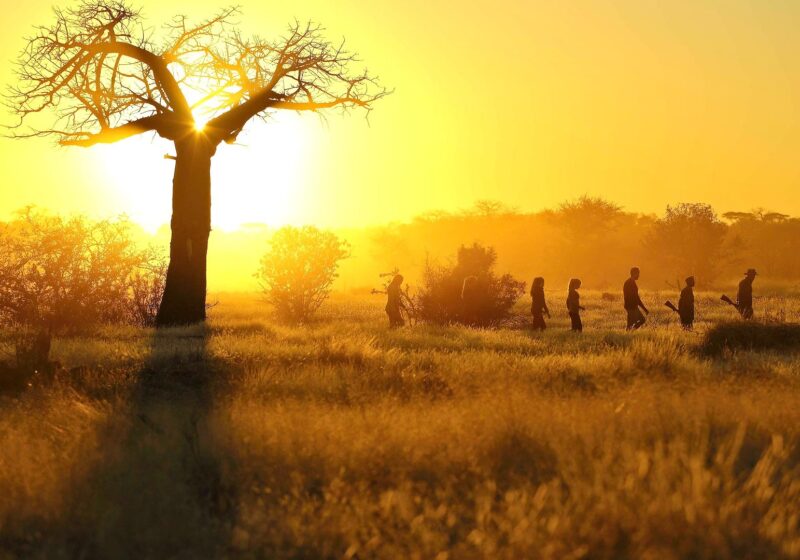
The Serengeti is the oldest ecosystem on earth that still functions as it always has. The grass, the grazers, the predators, the seasonal movement — all of it operating on the same logic it has followed for two million years, across an area of nearly fifteen thousand square kilometres that the Tanzanian government has protected, imperfectly but persistently, since 1951. There is no other place on earth where you can stand in open savannah and watch a horizon that has looked exactly like this since before the genus Homo existed.
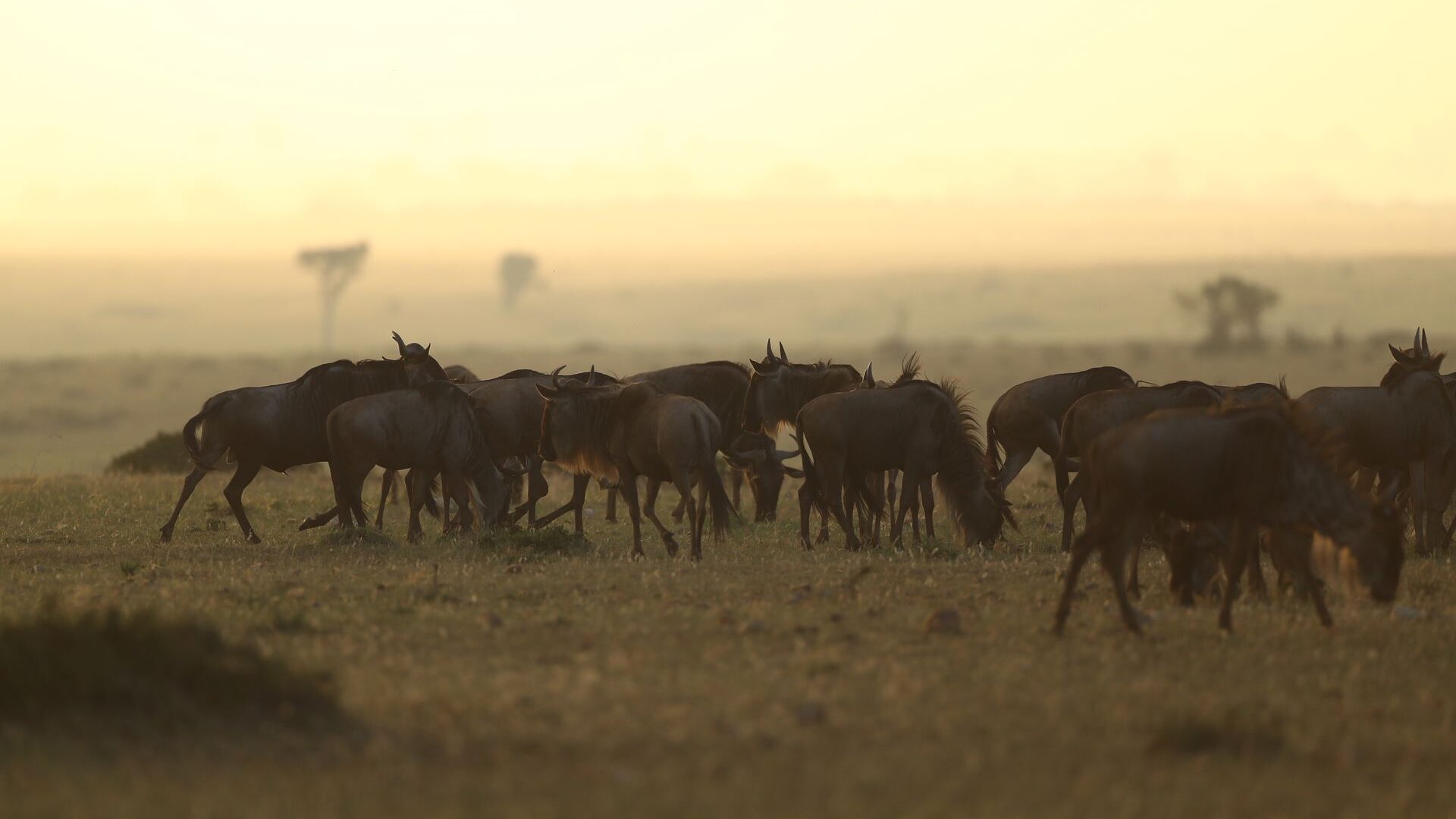
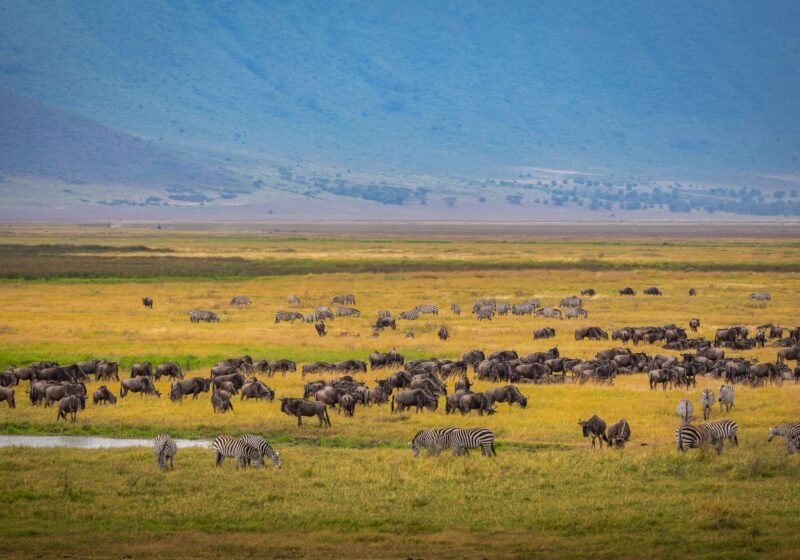
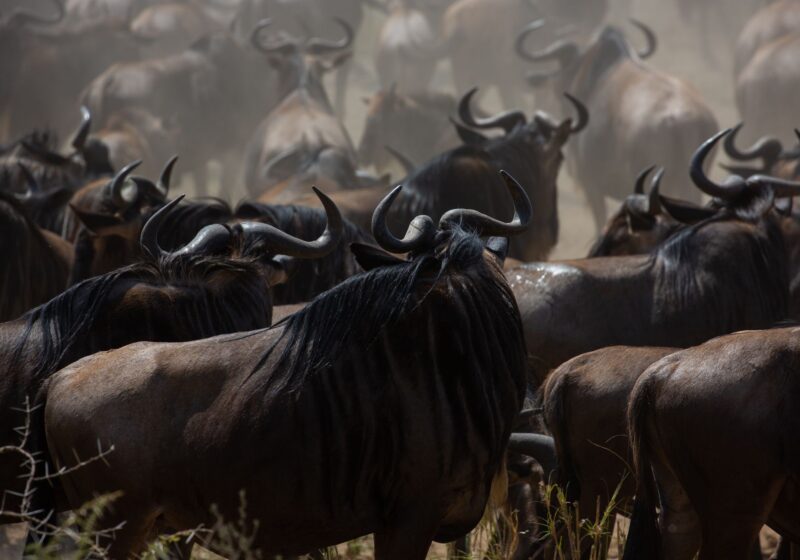
The migration is the headline — approximately two million wildebeest, zebra, and Thomson’s gazelle moving in a continuous clockwise circuit between the southern Serengeti plains, the western corridor, the northern Serengeti’s Mara River crossings, and back again, following the rain with an accuracy that no GPS has improved upon. But the Serengeti is not only the migration. The resident wildlife — lion prides whose territories have been documented for fifty consecutive years, leopard in the kopje country around Seronera, cheetah on the open plains, wild dog in the woodland margins — is extraordinary in every month. The migration is the amplifier, not the substance.
The park divides naturally into zones, each with its own character. The central Seronera valley is the most visited and the most reliably productive for lion and leopard year-round. The northern Serengeti — Lobo, Kogatende, the Mara River — is where the July–October crossings happen and where the camps are furthest from the main tourist circuits. The southern plains around Ndutu are calving season territory, January to March, when the grass is short, the light is wide, and the predator density reaches its annual peak. The western corridor is the least visited of the main zones — good for hippo, crocodile, and the migration’s westward push between April and June.
Key Wildlife
Lion, leopard, cheetah, wild dog, elephant, black rhino (Ngorongoro adjacent), wildebeest, zebra, Thomson's gazelle, hippo, crocodile, giraffe
Best Time to Visit
Year-round; July–October for Mara River crossings; January–March for calving season on Ndutu plains
Best For
First-time visitors, returning safari-goers, wildlife photographers, migration specialists
Add to Your Journey
Experiences worth
Experiences worth
adding.
These can be woven into your safari or treated as standalone days. Tell us which ones move you.
1 / 6
Serengeti National Park is best understood
from inside it.
We have worked in Serengeti National Park long enough to know which camps earn their place, which guides change how you see things, and when to be there. Let's talk.