

The Park
What makes
What makes
Victoria Falls National Park.
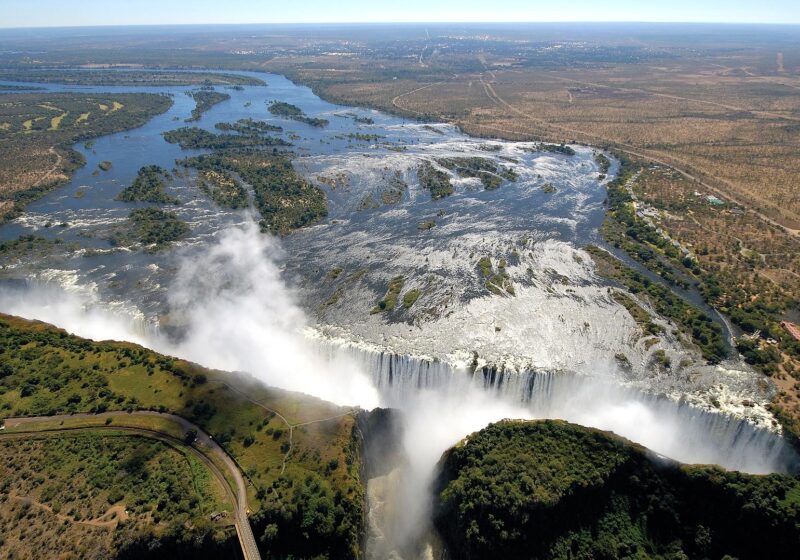
Victoria Falls National Park protects the Zimbabwean bank of the Zambezi River for approximately twenty-three kilometres upstream of the falls, encompassing the rainforest that lines the gorge’s edge, the series of viewpoints along the main falls curtain, and the riverine woodland along the Zambezi’s upper reaches that holds enough wildlife to justify the national park designation independently of the waterfall it was primarily created to protect. The falls themselves — Mosi-oa-Tunya in Kololo, the smoke that thunders — were known to the Tonga and Lozi peoples for centuries before David Livingstone became the first European to document them in 1855, naming them for his queen and describing them, with characteristic Victorian understatement, as scenes so lovely they must have been gazed upon by angels.
The falls are one hundred and eight metres high and, at peak flow, one hundred and seventy metres wide across their full curtain — a volume of water, up to five hundred million litres per minute in April and May, that produces spray columns visible from thirty kilometres and a sound audible from twenty. The geological structure that produces them is a series of basalt fractures running east-west across the Zambezi’s path — the river drops into the first fracture, fills it, and escapes through a narrow gap into a second gorge that angles back sharply, producing the zigzag pattern of gorges downstream that the aerial view reveals as a record of the falls’ slow westward migration across the basalt plateau over five million years. The falls are not stationary. They are moving upstream at the rate of the river’s erosion, and the gorges downstream are the geological diary of where they have been.
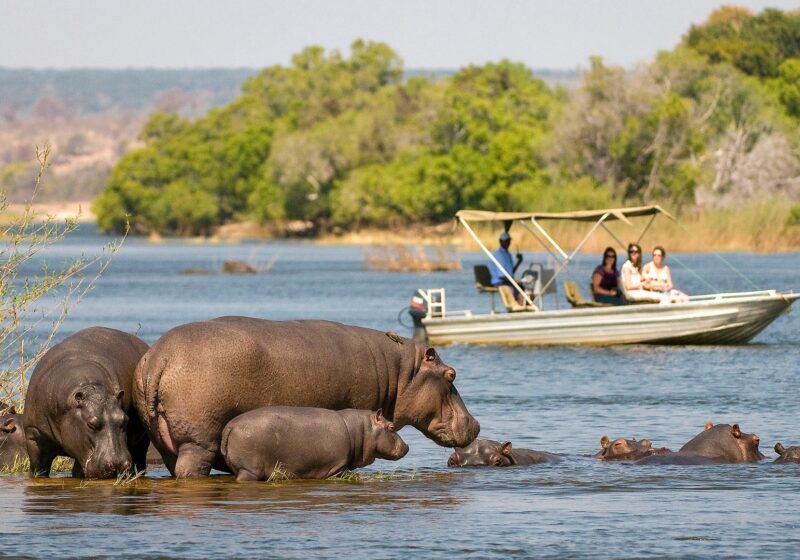
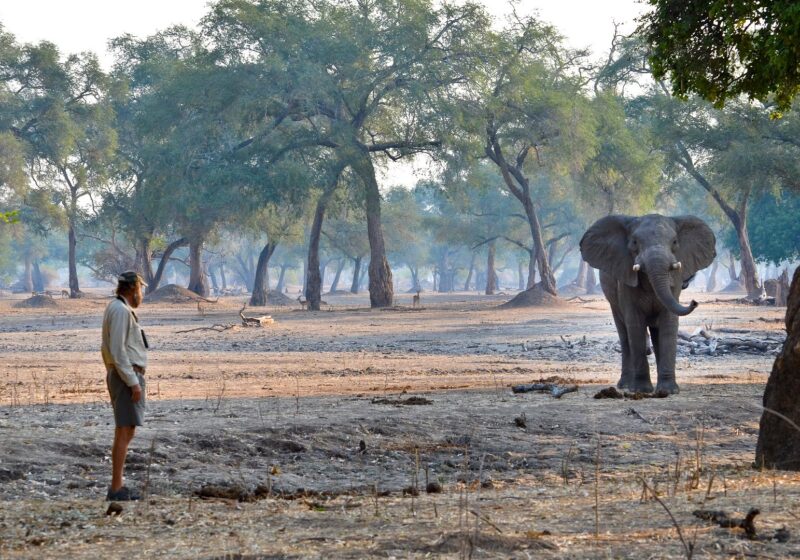
The rainforest path along the Zimbabwean viewpoints runs for approximately one kilometre from the Cataract viewpoint at the western end to Danger Point at the eastern boundary — a series of twelve numbered viewpoints, each offering a different angle on the falls, connected by a path that is permanently wet with spray at high water and that passes through a narrow belt of spray-forest so dense that the transition from dry mopane woodland twenty metres behind it feels impossible. The wildlife in the park upstream — elephant and buffalo coming to the Zambezi above the falls, hippo in the upper pools, the birdlife along the riverine woodland — makes a morning game drive along the river a worthwhile addition to any Victoria Falls stay. The falls and the game drive together produce a day that covers both of the park’s principal dimensions without rushing either.
Key Wildlife
Elephant, buffalo, hippo, crocodile, giraffe, zebra, warthog, vervet monkey, African fish eagle, trumpeter hornbill, half-collared kingfisher, Taita falcon
Best Time to Visit
Year-round; February–May for maximum water volume and spray; September–November for Devil's Pool access, clearer gorge views, and upstream game viewing
Best For
All visitors to Zimbabwe; first-time Africa travellers; those beginning or ending a Zimbabwe itinerary; photographers; those combining with Hwange, Mana Pools, or Botswana's Chobe
Add to Your Journey
Experiences worth
Experiences worth
adding.
These can be woven into your safari or treated as standalone days. Tell us which ones move you.
1 / 5
Victoria Falls National Park is best understood
from inside it.
We have worked in Victoria Falls National Park long enough to know which camps earn their place, which guides change how you see things, and when to be there. Let's talk.